
Continuing from the last Devlog, I want to talk about the attempts to balance Legions of Kadmon. Last time, I talked about balance at a smaller scope — cards and its distribution in the deck. In this Devlog, I want to talk more about balance in a bigger picture. There’s a few key questions to ask: Do everyone have an equal chance of winning? Is there a point to try to win even when I’m losing?
To end the article, I would also like to divert from Legions of Kadmon and give some opinions on modern game development. Particularly, how the pursuit of ‘balance’ can result in adverse consequences. Feel free to skip the last heading, if you’re not interested in anything beyond Legions of Kadmon.
Comeback Mechanic Principles
Everyone loves a good comeback. Imagine having the lowest score throughout the game. Then, on that last stretch, you turn the table around and win the game. Good comebacks left Players with an out-of-the-world satisfaction. There was something magical about it. Something that kept Players in their seats.
Here’s something about comebacks. It can be a double-edged sword. Games like Legions of Kadmon will always have a winner and a loser. The game is after all, competitive in nature, pitting a Player against another. That would mean that with every “Hooorays!” and pop-offs from a comeback victory, there will be another Player, thinking, what a trash game.
Trash game!? That’s a harsh judgement, isn’t it? Yes. Yes it is. Getting a support system implemented for the losing player is not the most difficult part about designing a good comeback mechanics. Rather, the damage control on the supposed winning player whose momentum had been stopped.
To find a good balance of comeback mechanics, there are two design terms that I used when it comes to describing the nature of these mechanics. First: Subsidy. Second: Opportunity.
Subsidies are mechanics aimed towards struggling Players. They can be card effects or extra mechanics accessible only by struggling Players. These mechanics hope to empower struggling Players, providing them with an ample fighting chance.
Opportunities affect everyone. There is no certainty on how these mechanics would help Players. On rare occasions, stronger Players might get even stronger. What these mechanics do is to open up more opportunities for struggling Players to make their comeback.
Ration Subsidies
That brought me to a very important point: subsidy-based mechanics cannot be overused. No Player can have easy access to subsidies at any time in the game. These mechanics should be present sparsely, distributed in a manner like that of rations.
In Legions of Kadmon, the most obvious example are cards that give an improved effect when you are the Player with the lowest Ichor. Cards with these effects are designed to help struggling Players. But these effects don’t come often. In fact, there are only two types of cards carrying Spells like these. Both cards happened to be Spirits. (There’s a reason for this!)
In a very rare scenario, a struggling Player may cash in on those powerful effects and may turn the game around in their favour.
Subsidies cannot be overly given. The reason? The feeling of unfairness. Stronger Players who had to work hard to get to their state are not getting any benefits from subsidies. But, struggling Players are rewarded for no extra cost.
This is why subsidies in Legions of Kadmon come in the form of Spirits. Among the three Unit Type bonuses, the Ethereal Formation (Spirit Bonus) provided the most opportunity for a comeback. Being able to cast more Spells means that you can disrupt another Player’s board state more. Thus, unlocking more ability to bring stronger Players down. Subsidies came as a Spirit Spell because Players are required to forego summoning a Spirit Unit. It puts them a step away from completing Ethereal Formation. In return, they get an instant boost of Spell effect for that single turn.
Another important aspect of a subsidy is its magnitude. In Legions of Kadmon, subsidies are designed with effects more defensive in nature. Should an effect be offensive, the extent of offensiveness is random. An powerful offensive effect has the potential to ruin another Player. Since Players have the liberty to choose their targets, there is no control on how Players shoot their guns. What if the struggling Player chooses to sabotage another struggling Player instead of the winning Player? That’d be such a feelsbadman moment.
Opportunities Before Subsidies
Whenever possible, a comeback mechanic should be designed as opportunities instead of subsidies. Opportunities set up favourable mindsets for all Players. Players who are ahead won’t feel targeted, believing that the current turmoil is a neutral effect. Struggling Players would feel that they now have the opening to make that comeback.
Designing opportunities are very much like incurring income tax. It’s true that every Players would be affected. However, the damage should be felt more by Players who are ahead.
As a matter of fact, on top of characters and flavour, this is how I design the effects of Sovereigns in Legions of Kadmon when they are part of the Legion.
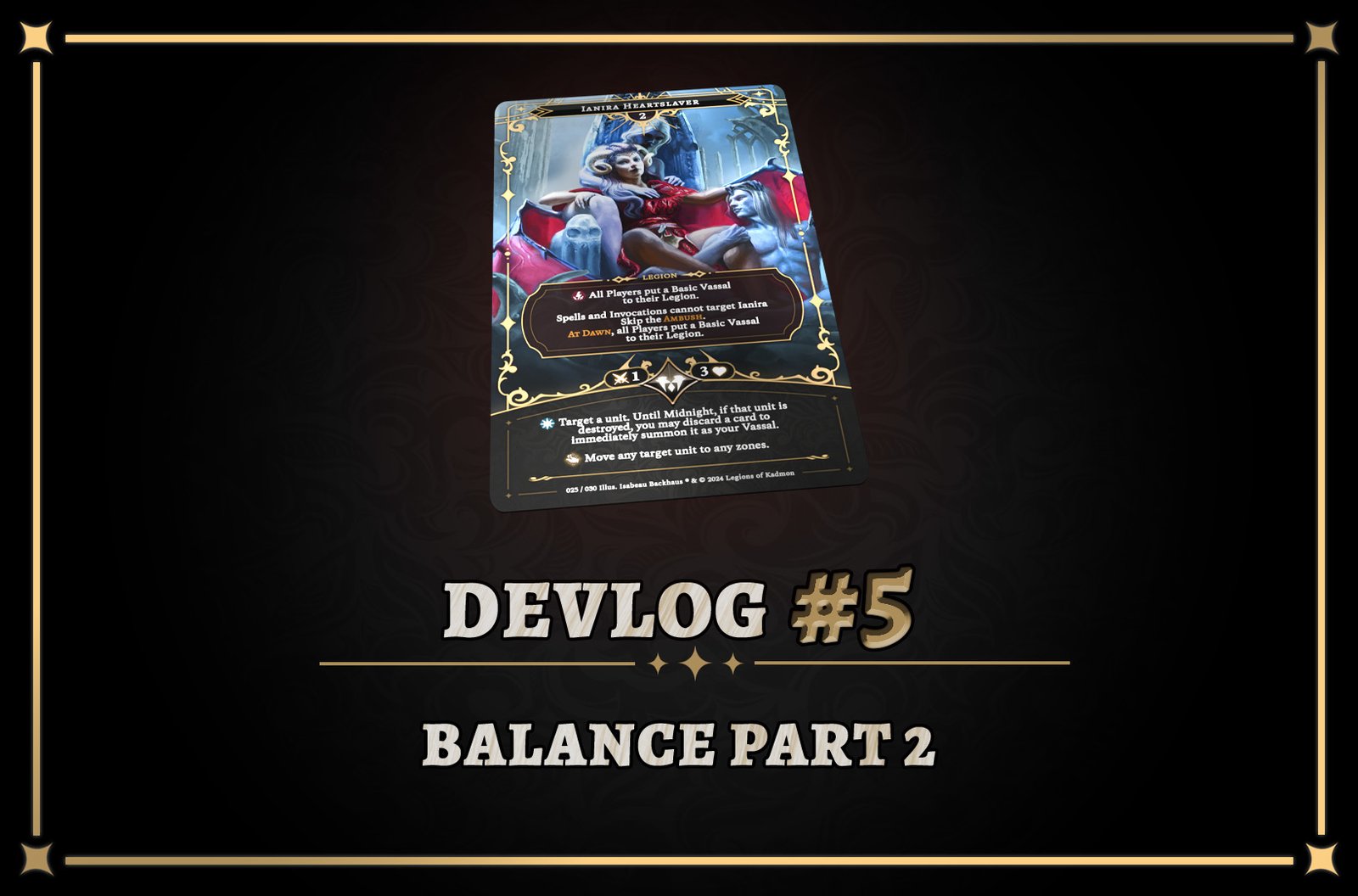
The best example I could give is Ianira Heartslaver. Ianira’s Calamity flips the state of the board. Players who have a stronger board are now in big trouble. Players with a struggling board will find themselves in a favourable position. The comeback became very obvious in the following Magna Cycle when the clause ‘Skip the Ambush’ takes place. Players with a struggling board will have the opportunity to deal direct damage to Ianira, obtaining as many points as they could. With no Legion present, struggling Players also have the opportunity to play Spells against stronger Players. This one cycle of freedom gave weaker Players opportunity to politic, opening up chances to make alliances.
Opportunities, while it may not give the comeback effect desired, would shake the stability of the board. Sometimes, it is enough for Players to see a much needed opening. The key to controlling this randomness followed the rule I’ve mentioned in my previous Devlog. To design a good opportunity-opening mechanic, it has to adversely affect stronger Players much more than the other Players.
Taking Ianira as an example once again, there’s 3 major scenarios we can use.
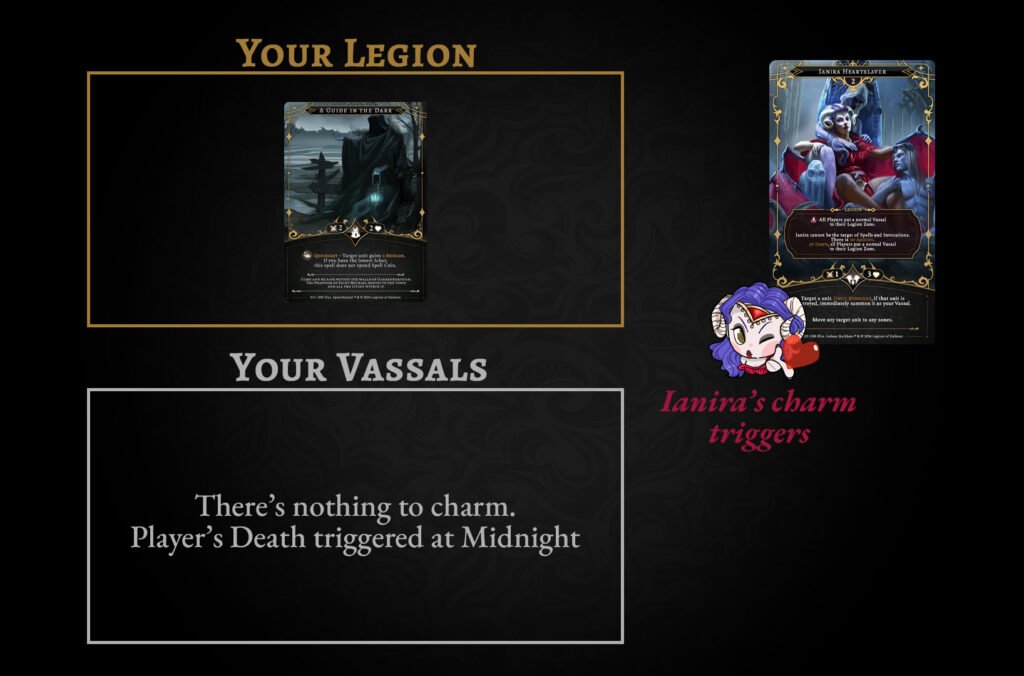
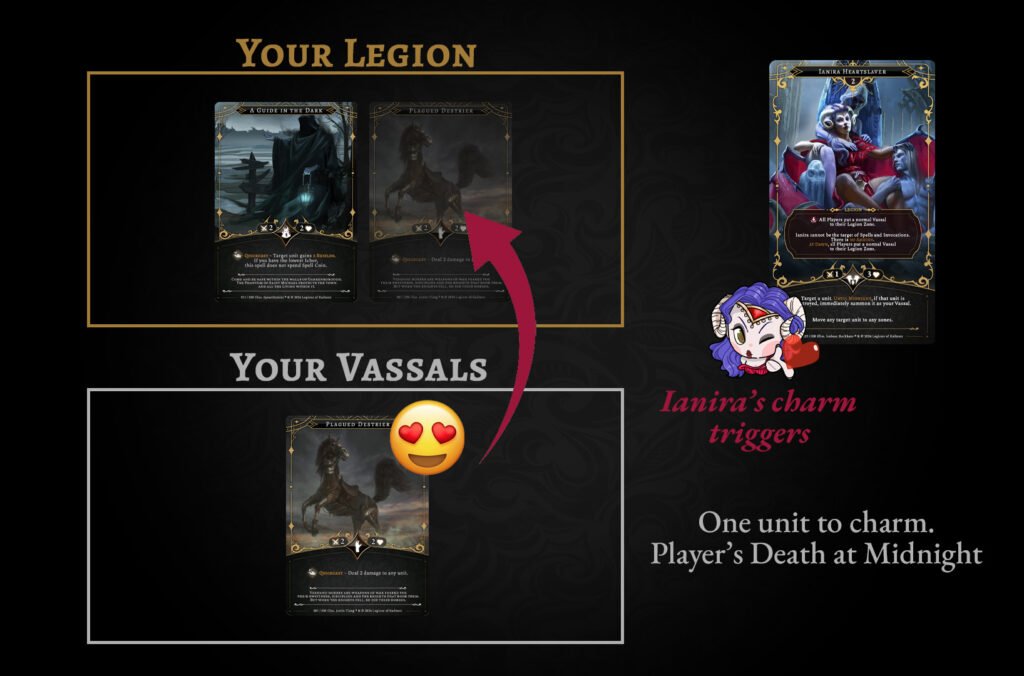
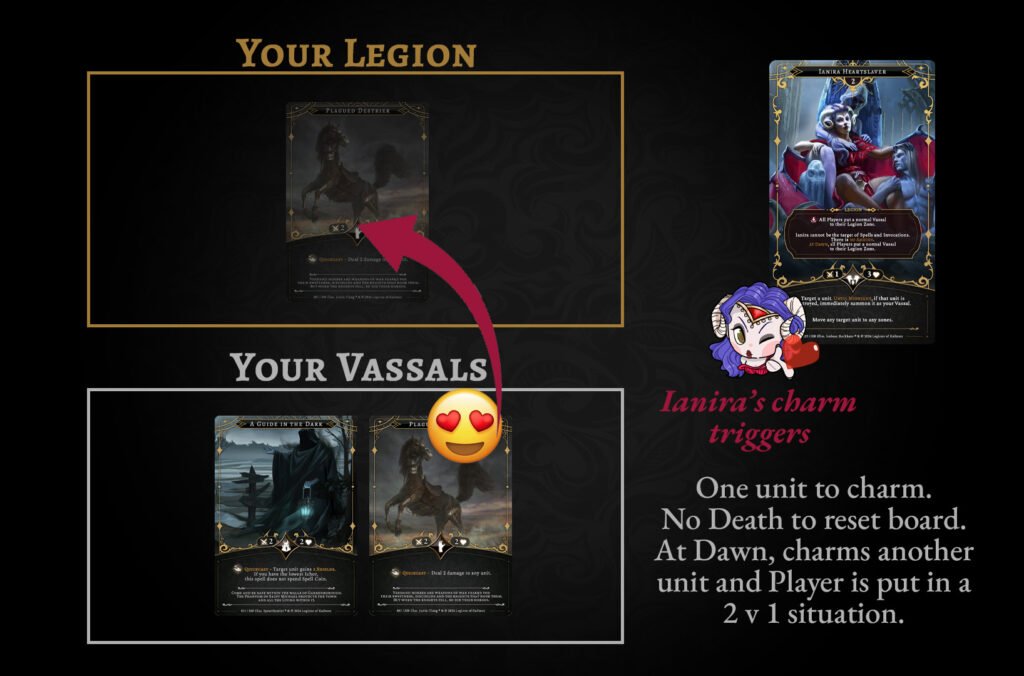
The three scenarios give you a brief example on how the effect of certain comeback mechanics can affect everyone in a bad way. However, to be the strongest Player will affect you in a worse way.
This skew in outcome can be expressed in other ways. For example, having more of your units affected by a terrible effect. Or changing the landscape such that the game is to be played a certain way. But most importantly, it must give impressions to Players that they have a chance to turn the game around.
Threat Measurement
When it comes to comeback mechanics, there has to be a basis of measurement. The design term I used is threat measurement. A threat is a Player who is at a significant advantage.
In a Player’s perspective, there are obvious indicators to determine whether a Player is powerful. The most obvious one being the amount of Kadmon’s Ichor. Player with more Ichor is the most favoured to win the game. Another factor would be whether a Player owned a Sovereign. A Player with Sovereign attracts attention, and may be considered one with the most advantage.
As a designer, we must consider these factors. On top of that, you must balance comeback mechanics based on factors you define. After all, it is up to the designer to decide whether a Player is to be considered a threat or otherwise.
Designing a game’s system that punishes threats is difficult because it goes against the flow of the game. If the punishment incurred is too harsh, you could risk stopping the game’s momentum. This is a scenario that happened often during the early phases of Legions of Kadmon. I taxed the strongest Players so much that it became unenjoyable for them. Whenever possible, it is better to strengthen weaker Players.
Kadmon’s Ichor
The Victory Point. It is a blatant number that screams “I have the advantage.” Players with more Ichor simply have the highest chance of winning. Kadmon’s Ichor is an indicator for Players to quickly determine who among them are the threat.
Yet, Kadmon’s Ichor often does not represent the state of Player’s strength at the current instance. Victory points allow threat measurement in the bigger lens. It signals to the Players that there is one among them to keep an eye on. Besides, whether a Player would decide to act against the winning Player depends on their understanding of the game.
Designing comeback mechanics based on Kadmon’s Ichor is the simplest among the others. This is because Ichors are quantifiable. So I tend to link subsidy-based effects to Ichors because it is a factor that is easier for me to control.
Sovereigns
Sovereigns are something dear to my heart. They are the heart of the game, and something that I put a lot of effort into design. Throughout my time designing Legions of Kadmon, I have spent the most time making sure Sovereigns are fun to play against and with.
A Player with Sovereigns is an immediate threat. No matter how much these Players tried to convince you otherwise, having Sovereigns boost a Player’s power level by a considerable amount. When Played right, a Sovereign can change the tide of battle or secure the win for a Player.
Sovereigns are designed with an in-built comeback mechanic in mind when played as Vassals.
When a Player summons a Sovereign they are usually given an extra action as a bonus. It is essentially more resource they could use in a Cycle. Usually, these come in the form of an Invocation. There are other Sovereign like Fragment of the Great Evil that award an more Summon coin. In its essence, these extra actions will be enough to gather momentum for a Player to win the game.
Does that mean that we’re strengthening an already strong Player? In a way, yes. But due to the core mechanic of Legions of Kadmon added a layer of risk. When a Player summons a Sovereign, they are exposing them to other Players’ Spell. This opens up the opportunity for other Players to destroy the Sovereign and steal them for themselves. And this once again points back to my previous point of opening up opportunities for a comeback.
Well, I’ll use a Sovereign as a Spell then! That would mean that you’d be discarding them forever. And that also means that the design for a Sovereign’s Spell is very sensitive. Sometime in the development process, I realised that I couldn’t make a Sovereign’s Spell something that could win a game. Rather, these Spells must be defensive in nature or if it is offensive in nature, it should be sabotaging rather than game-winning. A defensive spell cannot win you games. A sabotaging spell sets another Player back, but it doesn’t help a winning Player much. And in a multiplayer game, the winning Player has more enemies than one while losing Players have a single archenemy that is the winning Player. A sabotaging spell is more valuable to a losing Player than a winning Player.
Let’s take Fragment of the Great Evil for an example. Without a doubt, it is one of the strongest Sovereign in the game when summoned or casted. The Fragment embodies this design principle better than any other Sovereign.
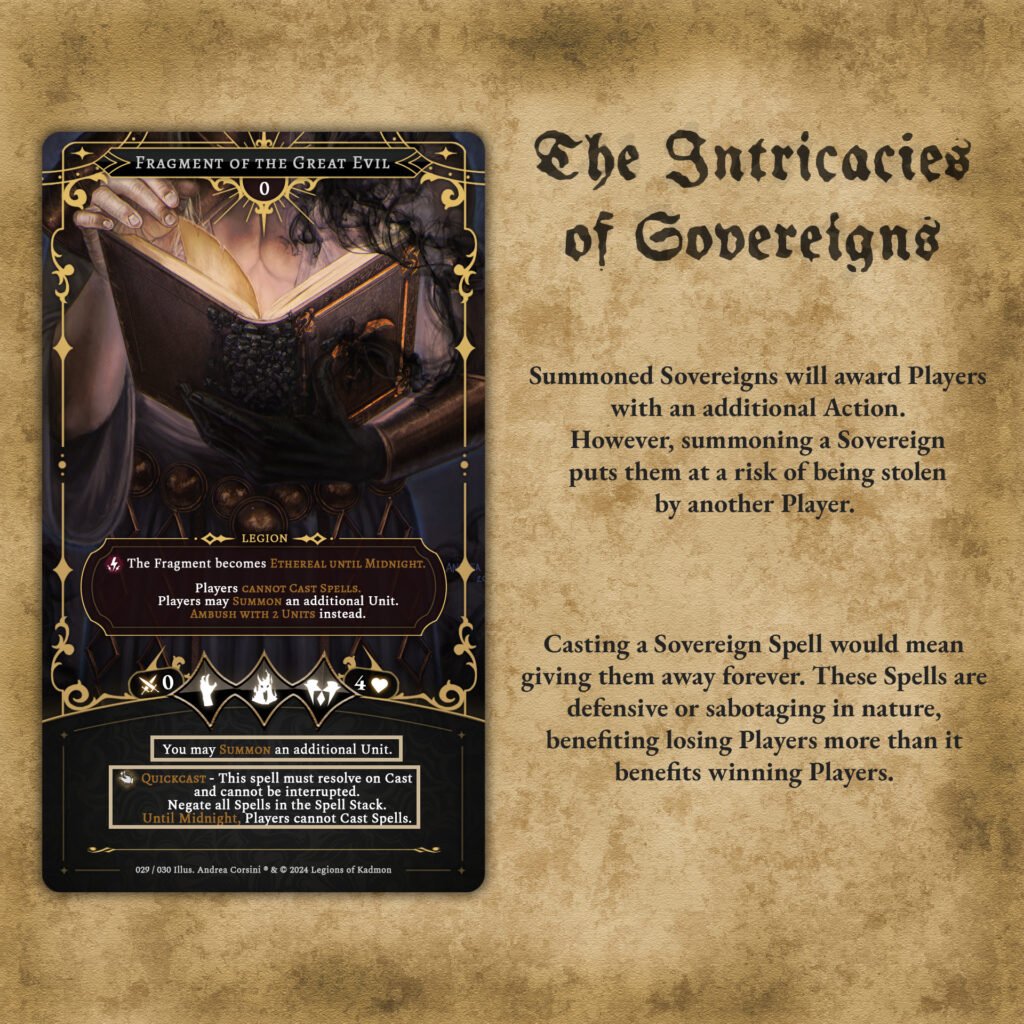
When summoned, the Fragment awards Players with an extra action in the form of an extra Summon instead of an Invocation. As a Spell, the Fragment does not win games but serves as the ultimate defensive spell that negates any effect coming your way.
There are some Sovereign that become an exception to the rule. Ahem, Kilgore…
Four is the Magic Number
The randomness of Ambush made answering this question a little more complicated than it may seem. Opportunities may open up to Players depending on the sort of units appearing in their Legion. High powered units might force Players to focus more on their board than the other. While low powered units can be lenient and allow Players to play Spells somewhere else. The clearest answer to this question is the number four.
Four is the magic number. In Legions of Kadmon, four is the highest number you can see – power, life, damage, shields. No number will exceed the number four. This means that if a Player meet the number four among their Vassals can be considered a threat.
A Player with 4 Total Vassal Power can destroy anything an Ambush throws at them. A Player with 4 Total Vassal Life can endure anything an Ambush throws at them. When a Player attained the number 4, that Player need not worry about their own board state. They are free to spend their one Spell to tilt the state of the game in their favour. Or to save their Spells to protect themselves in case anyone would harm their already stable board state.
Without the intervention of a Sovereign. A threat will most of the time have the Spell advantage over other Players. That means that two Players must cooperate to take down a threat. But there’s no guarantee that it’d happen. After all, it’s up to the Players how they’d want to play their game. So how do we help the weaker Players overcome this threat?
Active Sovereigns is an answer. And I’ve given a brief rundown on the previous section pertaining to ‘opportunities’. Another answer would be the introduction of these two specific cards. The rulebreakers: Watchers of the Peak and Ravenous Ruffians.
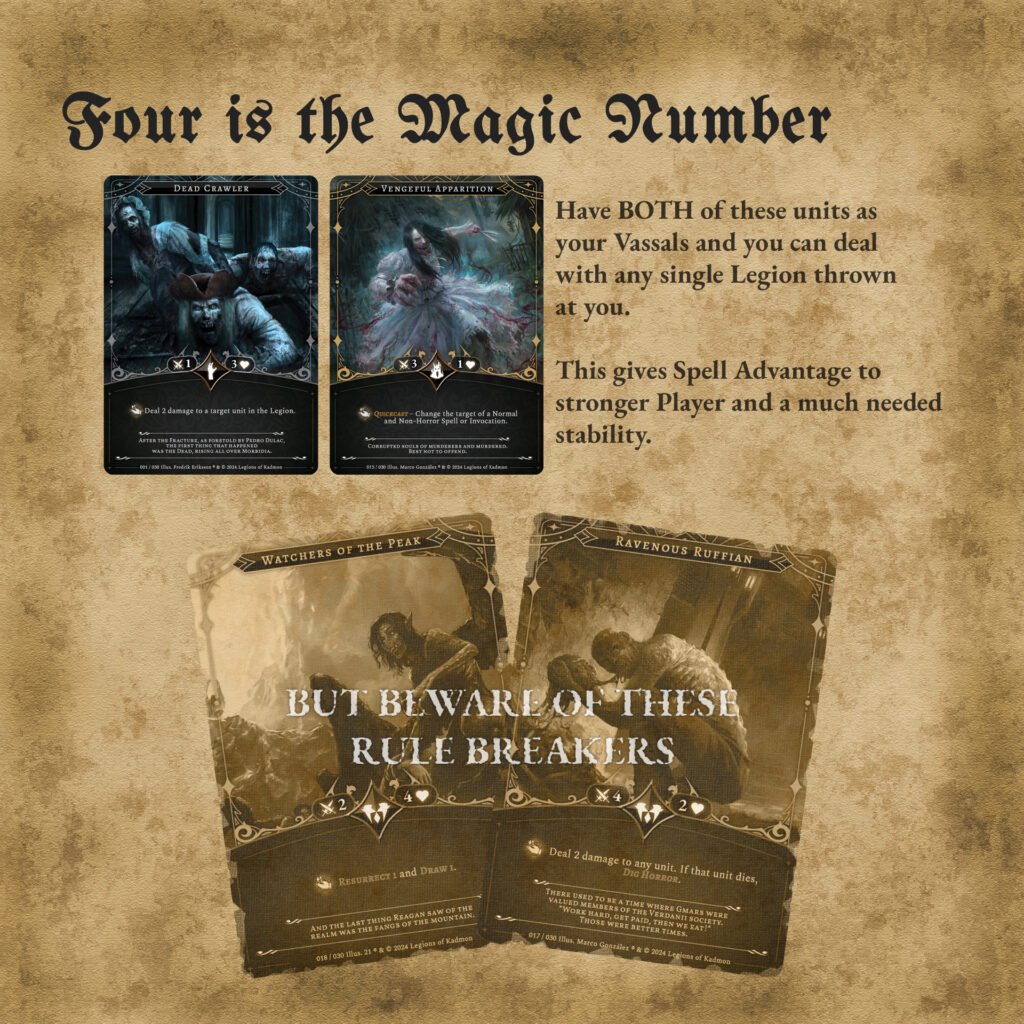
Encountering these two units will shift the board’s stability because one has 4 Life and the other has 4 Power. If a threat encounters Ravenous Ruffians, they have to give up their spell advantage to deal with it if they wish to survive combat. If a Player summoned Watchers of the Peak, they will attain Life stability in a single cycle, awarding them a Spell advantage round early.
Developer’s Tips: Holding onto Watchers of the Peak is extremely important to bounce back. The card’s strength is comparable to a Sovereign. Use the Watcher’s spell only if you have a clear advantage.
No Clear Answer
As you read this article, you might’ve realised that there’s no clear answer to making a good comeback. And yes, you’re right. There’s too many factors to consider and there’s way too many scenarios. But the more you play Legions of Kadmon, I hope you realised that most rewards come if a Player could maintain a board without being disrupted. Yet most cards effect are designed to cause disruption. That means that in the larger scale, weaker Players tend to have more advantage when it comes to the versatility of Spells they can use.
Lowest Ichor, Sovereigns, Special Horrors. All of them contributed to the downfall of a threat. And on top of that, there are cards that allowed you to make deals with another Player, opening up opportunities to collaborate.
These are what makes Legions of Kadmon feels so back and forth. The game makes room for opportunities. It gives the illusion that it is a balanced game, even though on paper the randomness kind of made it isn’t. But as long as Players can feel that there’s a way for them to make a comeback, then it’ll keep the Players engaged, looking for that small chance for them to turn the game around.
The Perfect Equilibrium
In this section, I’ll talk more about game development in a broader term rather than Legions of Kadmon in particular. Feel free to skip it. I understand that it has been a long read. This is for those looking for some insights in their game making journey.
As I’ve previously mentioned in the introduction of Devlog#4, I can get very competitive when it comes to my games. As such, I took a lot of scrutiny when it came to finding that perfect game balance. It had taken me quite some time that this holy grail DOES NOT EXIST! And honestly, I blame the current gaming culture a little.
The Curse of Esports
When Overwatch came out in 2016, I remembered how fun the game was. I spent hundreds of hours playing the game, burning midnight oils and weekends. Everyone was still figuring out how to play the game, and there were a lot of shenanigans going on in the game. Players would hit multi-kills so easily with a single Hanzo Ultimate. There was no meta.
Over time, Players began to learn how the game is to be played. And me — someone who was very competitive about my games — followed the trend. As I obliged to the metagame, I realised that I began to lose interest in the game. The metagame is not fun to play. And there was a pressure at the back of your head that kept telling you to play better.
And not even a year into the game, I’ve completely lost interest.
This is what I believe to be the curse of esports. As the gaming community grows, we see more developers attempt to build the next esports. They struggled to find that perfect metagame to make the best competitive experience. It made many developers forget that games are supposed to be fun.
I believe that this is also something I’ve learned as I am developing Legions of Kadmon. I spent 1.5 years trying to find a competitive metagame, when the game is not meant to be a competition.
I think it’s important for modern developers to understand that there are more aspects to games that draws a dedicated fanbase. Explore aesthetics and study the format your game is played on, instead of focusing solely on mechanics alone.
Pursue Emotions
Ever wonder why we love our favorite games, books and movies so much? It doesn’t matter if the critics hated it. It doesn’t matter if you’re the only person who loves that movie or games. You could never hate them, because there was just something about them that is very close to your heart.
Dear readers, that’d be attributed to emotional connections.
Emotions are powerful tools, and something that every creator should convey. To convey emotions is a gift that has been granted to us. A talent to touch people’s hearts. The goal of a game is to make sure your Players have a great time. To make sure that they laugh boisterously and shout at the top of their lungs. To make sure that they say, “damn, that was a good game.”
My time spent on playing narrative-driven Indie Games made me re-evaluate the development of Legions of Kadmon completely. I used to think that ‘balance is king’. But I grew to understand that, actually, fun is king. It doesn’t matter if your game is the most balanced game in the world if it’s boring. Nor does it matter that you can create a competition for your game if the Players made no connections with the game. In the end, you would not want Players to say ‘heh, I win, get rekt.’ but instead ‘That was fun. Let’s go again!’
Winning might be a factor of fun. But it is certainly not the only one.
Afterword
Is there a perfect balance? If you’re a developer, sadly the answer is no. At the end of the day, no matter how much you’ve tested the game and how intensive those tests can get, you can never control how the Players play your game. I can’t reprimand Players who’d only want to Summon and not cast any Spells. Nor could I ask Players to attempt to damage the Active Sovereign and not just Summon Units that match their attacking Legion. Or ask Players to stop triggering Player’s Death intentionally and spend the entire game session sabotaging other Players. There is no way of telling how your game is going to be played. The only thing you could do is to make sure that your Players are having fun, no matter how busted something may seem.

Leave a Reply